Russ and Travis reconcile
The Journey CollectionRuss and Travis reconcile after the return of Travis McCoy to Clarendon forces a buried father-son conflict into the open. The reconciliation is not a single apology but a reversal in how both men understand the past: Travis learns that Russ McCoy’s workshop and silence did not mean indifference to Loralie McCoy, while Russ finally hears that his son’s anger has always concealed an unmet need for his father. Their restored bond becomes part of the larger family Travis forms with Penelope Stone and Max.
Causes and Buried Grief
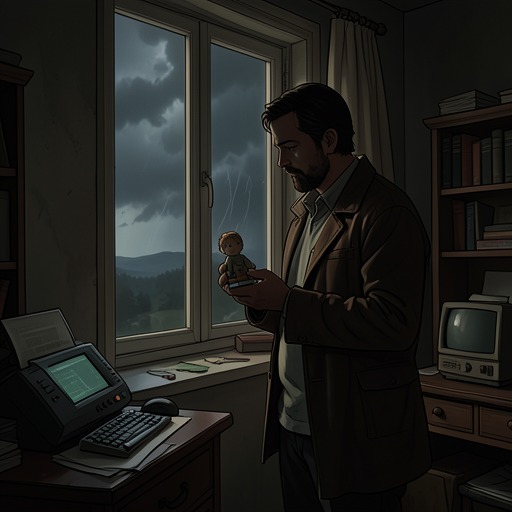
The conflict begins in the aftermath of Loralie McCoy’s death and the ten-year distance between Travis and Russ. Travis was nine when Loralie was diagnosed with Acute Lymphoblastic Leukemia. He watched her struggle through two years and numerous rounds of chemotherapy until her body became too weak to continue, and he was eleven when she died. From his childhood perspective, Russ’s long hours in the workshop looked like abandonment: the shelving unit in the living room represented years that Travis believed should have been spent caring for his dying mother. Travis had tried to help Loralie, but he had been only a child, unable to understand fully that she was dying and unprepared for the final morning when she went to sleep and did not wake.
The grief hardened into a moral judgment. Travis could not forgive Russ for failing to sit beside Loralie as he had done, holding her hand while she suffered. Football then became the language through which Travis organized his own life. The posters covering his old bedroom walls had once motivated him to work harder and pursue his professional dream, but they also marked the direction in which he had escaped from the family wound. His return to the preserved house therefore brings him back not merely to a place, but to the scene of an unresolved accusation.
That accusation is intensified by the discovery that Russ knew Max was Travis’s son and had not told him. When Travis confronts him outside the house, he demands to know whether his father already knew about Max. Russ’s silence at the boy’s name confirms the concealment before the two men are ready to discuss its full consequences. Travis’s anger combines two injuries: the belief that Russ abandoned Loralie and the realization that another decade of fatherhood was lost while the truth about Max remained hidden.
The Confrontation and Recognition
After the confrontation, Russ is found alone at the kitchen table with dozens of snapshots spread before him, one hand pressed to his forehead and the other gripping the back of his neck. The domestic setting exposes a side of him Travis has almost never witnessed. Russ says that he loved Loralie and still does, remembering her laughter and her cheeky smile. His grief is not presented as a new feeling but as a private, long-contained life that had remained inaccessible to his son.
Russ then recalls the night Loralie went into labor. He had carried her to the truck and driven nearly eighty miles per hour, getting her to the hospital in time for Travis to be born in the front seat. The memory complicates Travis’s image of a disengaged husband: Russ had acted urgently and physically to protect the woman he loved, even though his later responses to her illness appeared to Travis as withdrawal. The birth story and the photographs make family history tangible, shifting the argument from an abstract charge of neglect toward two incompatible experiences of the same marriage and death.
The emotional center of the reconciliation arrives when Russ admits that he wishes he could have saved Loralie but could not because the cancer had already taken too much from her. He says that he had watched her struggle for breath, held her every night, and prayed that God would take him instead. Travis answers that the loss was his as well: Loralie was his mother, and he was not finished needing either her or Russ. He identifies the deeper injury beneath his anger, telling his father that he did not know how to deal with the death and that Russ pushed him away instead of helping him.
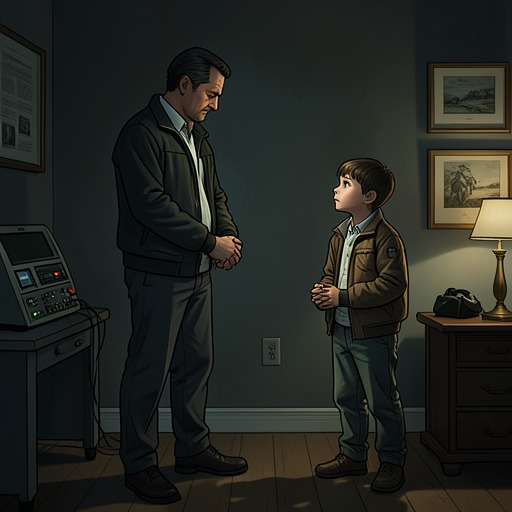
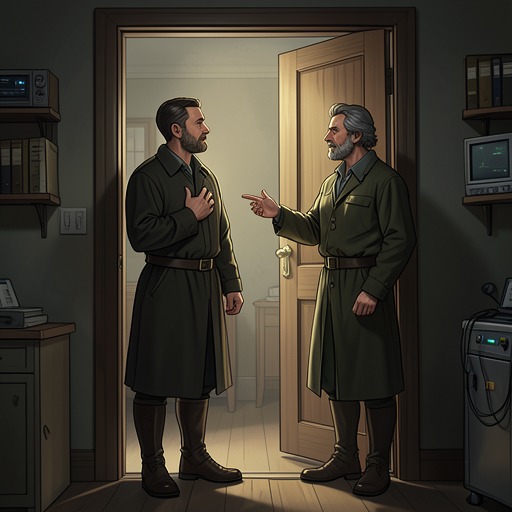
Russ responds with a direct apology. He places a hand on Travis’s shoulder and says he is sorry he was not a better father, while also revealing that he has always been proud of him. Travis’s immediate objection is that Russ never said so. Russ explains that he mistook Travis’s closeness to Loralie and later devotion to football for independence, assuming that Travis would ask for help if he needed it. Travis corrects that interpretation by stating that there had never been a time when he did not need his father, especially now, when everything was out of control. The exchange changes their relationship from mutual silence to explicit negotiation: Russ proposes making supper and talking things through, and Travis accepts.
Rebuilding Through Family Life
The reconciliation gains meaning through the other family bonds Travis begins to claim. At the homecoming pep rally, he hears the fight song, sees the packed bleachers, and remembers both loving and hating the Fridays when the community watched him. When he later leads the Clarendon Broncos onto the field, the same public football world that once served as his escape becomes a setting for belonging. Standing at midfield, he tells the players that the crowd’s support has been earned through hard work and that they should be proud of the men they have become. Penelope, Russ, and Max wait for him at the edge of the field, making the community spectacle a family scene as well as a coaching moment.
Travis’s relationship with Penelope and Max gives his repaired connection with Russ a future beyond the original argument. Travis proposes to Penelope by recalling that he has loved her since he was fourteen and that she has always possessed his heart and soul. Before their marriage, he asks to change Max’s last name to McCoy, explaining that if Penelope is to become a McCoy, he wants Max to be one too so that they can be a real family. This decision converts biological discovery into acknowledged belonging and contrasts with the earlier concealment that kept Travis outside his son’s life.
The wedding makes that new family identity visible through ceremony. During the marriage service, Travis and Penelope exchange vows and rings, then bring Max between them to light the eternity candle together. Max is not merely present as a witness; he participates in the ritual that establishes the household as a family unit. The scene completes the movement begun in Russ’s kitchen, where father and son first make room for direct speech and shared life.
Letter, Legacy, and Continuing Reconciliation
Russ’s later letter deepens the reconciliation by returning to a small childhood incident rather than another dramatic confrontation. When Travis was four, he begged to ride on the tractor. Russ initially put him to bed, promising to take him the next day even though he did not intend to keep that promise. Loralie warned him that his son would be gone before he knew it and that he should not blink or miss him. Russ then found Travis asleep with a picture of the two of them clenched in his hand, an image that brought him to his knees and changed his decision. He took Travis into the field, where the child sat on his lap, laughing and talking.
The letter states what Russ had failed to say during Travis’s childhood: he has always been proud of his son, loves him, and believes Loralie would look down on him with pride. Its importance lies in its timing and form. The spoken confrontation allows both men to acknowledge the wound, while the written testimony preserves the memory and gives Travis words that can be reread. Russ’s explanation does not erase his failures, and Travis’s forgiveness does not deny the years lost, but the letter supplies a counter-history to the one created by silence.
The family’s later celebration of Penelope’s pregnancy shows the reconciliation operating as an ongoing condition rather than a completed apology. Nadine opens a box containing an ultrasound photo, and Russ reacts with startled joy, demanding confirmation before congratulating the family. Travis observes a household containing a mother and father, a son, a wife, and a baby on the way. The scene’s crowded meal, teasing between Russ and Max, and questions about Penelope’s due date and possible names present ordinary participation as the final consequence of the father-son repair. Russ and Travis do not simply stop fighting; they recover a place for one another inside a living, expanding family.